
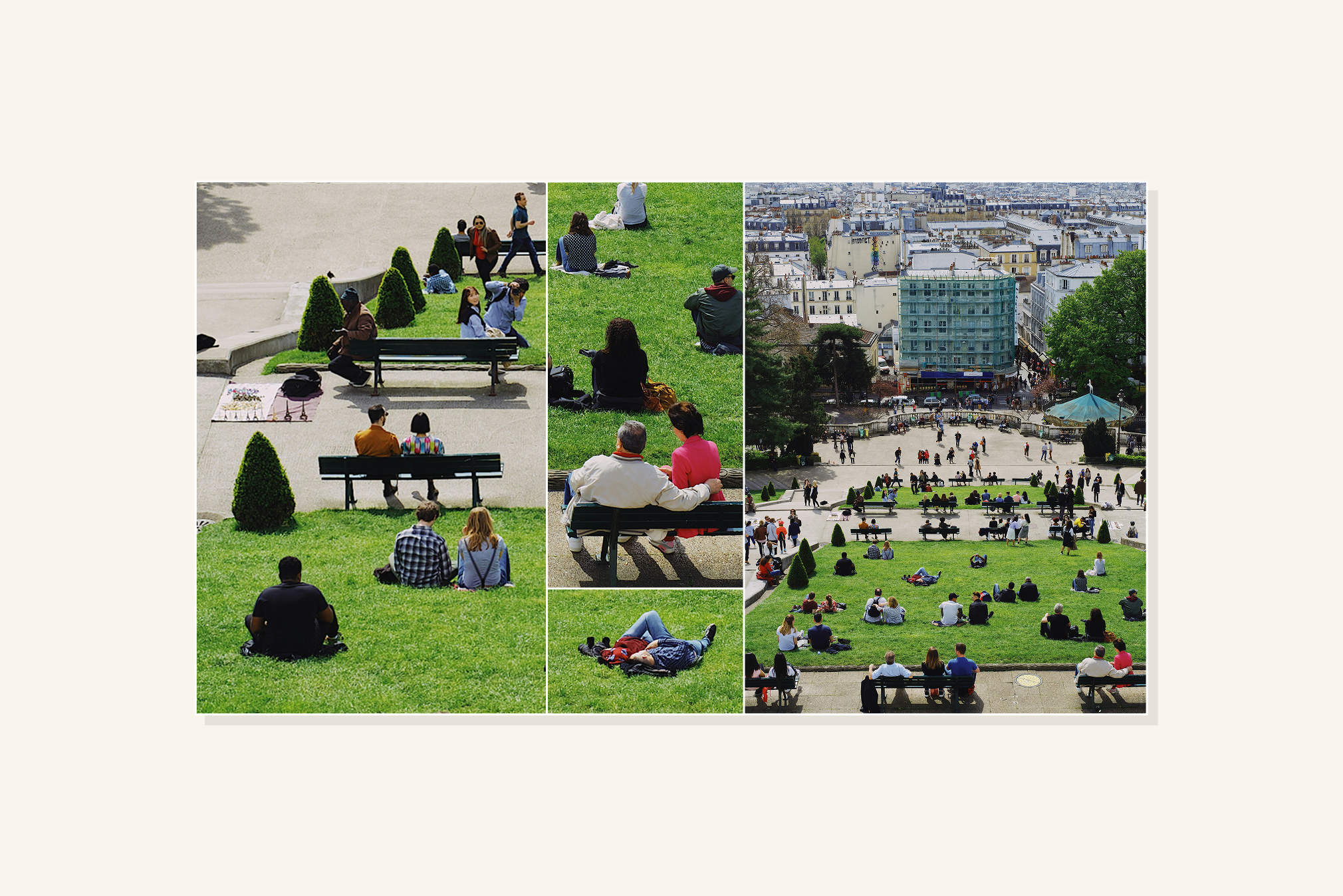
The paradox of connected isolation in modern America.
Americans have never been more connected. And we’ve never been more alone.
Worldwide, the internet reaches 6 billion people. There are more mobile devices than humans on Earth. Global literacy has increased more than seven-fold since the 1820s. Modern aviation connects all seven continents within hours. Life expectancy has doubled in the past 200 years. The barriers that limited human connection for millennia collapsed within a generation or two, creating more opportunities to connect than any previous era in human history. Yet despite this unprecedented capacity for connection, Americans are often choosing solitude.
This marks a dramatic reversal from the American identity that Alexis de Tocqueville observed in 1835. “Americans of all ages, all stations of life, and all types of disposition are forever forming associations,” he wrote, marveling at a nation that balanced fierce individualism with collective purpose through thousands of cross-class organizations — commercial and civic, serious and social. For 150 years, that assessment held true. The 20th century built powerful collective structures — unions, churches, civic organizations, shared media — that channeled American individualism into community as a value.
The 21st century is breaking that balance: Individualism is on the rise globally, and the United States is experiencing hyper-individualism. Individual autonomy has replaced our collective practices, and technology has made it easy to isolate. Self-checkout stations replace casual connections in communities. On-demand video streaming replaces the shared experience of watch parties. Remote work eliminates the daily collision with coworkers. Social media promised to connect everyone while actually enabling retreat into ideological echo chambers. Economic inequality — on the rise since the 1970s — has further sorted Americans into increasingly segregated neighborhoods, weakening democracy.
The most hopeful finding is that our current disconnection exists despite unprecedented capacity to connect. The opportunity isn’t nostalgia for Tocqueville’s America, but designing new structures for the America that currently exists: It’s more diverse, more mobile, more digital, and still fundamentally human.
What’s true right now
Americans are doing less traditional connecting, and this pattern shows up across nearly every category of informal socializing. Party hosting and attendance has declined sharply, particularly among young adults; in previous eras, younger generations were associated with peak social activity. Alcohol consumption is dropping, especially among Gen Z, eliminating the bar and party culture that once served as default social infrastructure for people in their 20s and 30s. Sexual activity is down across age groups, with younger Americans reporting fewer partners and less frequent sex than previous generations at the same age.
These aren’t separate trends — they’re symptoms of a broader shift: Younger adults are withdrawing from social interaction that involves risk, vulnerability, or unpredictability. Gatherings inherently require coordination, potential awkwardness, and uncontrollable outcomes. Meeting friends at a bar means navigating scheduling, transportation, expense, and the possibility of an evening that doesn’t deliver. Parties require showing up without knowing exactly who will be there or how the night will unfold. Sex requires physical and emotional vulnerability with another person. Meanwhile, living in modern solitude is frictionless by design. Streaming a movie alone requires one click, as does food delivery. Many people maintain friendships through text rather than in-person meetups. Leaving home now requires overcoming social inertia rather than necessity. Just as taking the escalator is easier than the stairs, consistently choosing convenience over effort erodes our “social fitness.”
Increasing lifespans challenge traditional assumptions about life stages, shifting when and how we experience situational positive social collision. The 20th century offered a predictable script: education in your teens and 20s, career launch by 25, marriage and children by 30, peak earning years in your 40s and 50s, retirement at 65. This rigid timeline created automatic synchronization — cohorts of people moving through the same stages at roughly the same ages, facing similar challenges simultaneously. Young people fostered lifelong friendships in school. New parents met at playgrounds because their children were the same age and so were they. Retirement communities and activities formed naturally because everyone stopped working around 65.
But dramatic increases in life expectancy have created unprecedented optionality in when — or whether — to hit traditional markers. Today, a mother of a grade-school child could be 25 or 50. A 35-year-old might be a single parent, married with teenagers, divorced and starting over, or deliberately child-free and working remotely while traveling the world. A 60-year-old could be retiring, launching a second career, caring for grandchildren, or raising young children. The explosion of choice means people at the same chronological age may inhabit completely different life stages with different daily rhythms, different priorities, and different communities. The optionality is liberating on an individual level — but may be atomizing and isolating at the social level, removing the structured collision points where friendships once formed easily.
Economic inequality increases social distances between groups, reduces perceptions of fairness, and creates power differentials that destabilize society by eroding both interpersonal and institutional trust — the foundation for social cohesion, civic engagement, and collective action. In the United States, the top 1% of earners’ share of income has neared the historical highs prior to the Great Depression. Wealth concentration has worsened even more dramatically: the top 10% now hold two-thirds of the nation’s wealth, while the bottom 50% hold less than 4%. This inequality translates immediately into physical and socioeconomic segregation as neighborhoods become increasingly stratified by class — eroding opportunities for casual connections that bridge social capital.
Considering these trends and barriers, it’s no wonder Americans are reporting feelings of loneliness. Loneliness evolved as a social alarm system — a signal designed to push us toward connection the way hunger pushes us toward food. But a signal only works if you can respond to it. As the infrastructure for casual connections crumbles, screens offer a convenient, if inadequate, substitution for broad-based human connection.
But loneliness isn’t rising universally. It’s concentrated among young people, with rates flat or declining for older adults, a pattern that reveals something fundamental about the shift. For decades, happiness across the adult lifespan followed a predictable U-shaped curve: Young adults were content, middle age brought a dip, then satisfaction rose later in life. That curve has straightened into an upward line. Older adults remain happy, middle age remains middling, but young adults — the first generation to grow up with smartphones — are now less happy and less socially connected than any other age group. The generational divide is stark: More than half (56%) of Gen Zers feel lonely at least once per month; the same is true for only one-quarter (24%) of Baby Boomers.
Impacts and implications
Individuals, family, and friends
The consequences of social disconnection can not be understated. Social connection correlates with positive mental and physical health outcomes, including increased longevity. Conversely, social isolation and loneliness have been linked to depression, anxiety, coronary heart disease, and stroke. Perhaps most striking: Social isolation increases the risk of premature death from any cause by 29%. In 2023, the U.S. Surgeon General issued an advisory declaring loneliness and isolation an epidemic, citing research that social disconnection has negative health impacts similar to or greater than smoking, obesity, and physical inactivity.
Physicians in the U.S. and the U.K. are increasingly prescribing social activities alongside traditional treatments, a practice called “social prescribing.” Doctors now recommend volunteering, joining community groups, or attending art classes as medical interventions for patients experiencing loneliness, depression, or chronic disease. Early results suggest that addressing social isolation as a health condition rather than merely a lifestyle issue could reduce healthcare costs while improving patient outcomes.
At the same time, some researchers point to potential health benefits emerging from shifting social patterns. The sober curious movement, particularly strong among Gen Z and younger millennials, has contributed to a measurable decrease in alcohol consumption. As younger generations drink less and party differently than their predecessors, rates of alcohol-related chronic disease may decline. While reduced social connection poses risks, the recalibration of how Americans socialize — away from alcohol-centered gatherings and toward activity-based connection — could yield unexpected public health gains.
Gen Z, despite being the loneliest generation, is actively leading the way toward reconnection. The experience economy is booming: Concert and live event revenue hit record highs in 2024, festival attendance exceeded pre-pandemic levels, and Americans are spending more on travel and in-person experiences than in previous years. New forms of gathering are emerging to replace the civic organizations that collapsed. “Soft clubbing,” intimate dinner parties, and the rise of social running clubs signal a deliberate pivot toward in-person connection, with Gen Z building community around hobbies centered on everything from pickleball to film photography to organized hikes.
Young Americans are designing solutions themselves, often through digital platforms that facilitate real-world gathering rather than replacing it. Some are even paying for technology tools to help reduce screen time. The shift suggests that while technology has accelerated isolation, it can also be reconfigured to rebuild connection — but only if wielded intentionally toward that end.
Organizational connection
The pandemic fundamentally altered how Americans work, creating a natural experiment in disconnection that revealed both what’s essential and what’s negotiable. Remote work removed the casual collisions that built relationships — hallway conversations, impromptu lunch invitations, the unscheduled five minutes before a meeting starts. For some workers, flexibility created opportunities for deeper connection outside of work: picking children up from school, joining a weekday running club, being present for aging parents. For others, the shift made disconnection frictionless, with research showing that workers who experience psychological disconnection from their workplace report higher levels of cynicism, lower job satisfaction, and increased work-family conflict.
Strong organizational cultures require shared experiences, repeated interactions, and the kind of trust that develops when people navigate challenges together in real time. Organizations now recognize that connection is a strategic responsibility — beyond mandating a return to office. Office real estate portfolio strategies must balance commute times, hybrid models, and office design to prioritize collaboration and culture-building, rather than individual productivity. And Gen Z employees recognize the value of balancing in-person time with flexibility.
While companies grapple with rebuilding connections within their walls, community-based places and organizations that historically bridged socioeconomic divides — libraries, churches, unions, public parks— have either disappeared or become increasingly stratified along educational and income lines. This fragmentation has disproportionately affected Americans without college degrees, who have experienced steeper declines in civic participation and organizational membership than their college-educated peers.
Research shows that disconnection compounds geographically: Areas with weak social infrastructure — fewer third places, limited public spaces, declining civic participation — experience higher rates of loneliness and lower levels of trust, creating self-reinforcing cycles where isolation leads to more isolation. The communities that need connection infrastructure the most are often the ones losing it fastest, while affluent areas maintain or even expand their networks of social clubs, cultural institutions, and well-funded public spaces.
Research on civil society organizations reveals that physical design matters enormously: room layout, seating arrangements, and whether spaces encourage cross-demographic interaction all influence connection. Organizations that bring together people of different ages, races, and economic backgrounds strengthen social ties in ways that homogeneous groups cannot. Connection doesn’t happen automatically; it requires intentional design and investment.
- Which roles in your company are responsible for fostering connection? Do they collaborate –– or work in silos?
- How does your organization measure or improve employee connections?
- How is your community building inclusive, free, public spaces for connection?
- Does the physical layout of your workplace encourage cross-demographic mixing — different ages, races, economic backgrounds encountering each other — or does design inadvertently segregate communities?
- How might your organization use local investments, grants, or volunteer opportunities to foster stronger connections?
Policy
Social disconnection and political division reinforce each other. When people lack regular connection with neighbors, coworkers, and community members, abstract categories (political affiliation, race, class, geography) become the primary lens through which they see each other. Without the repeated, mundane interactions that humanize people across differences, “othering” intensifies. The result: Over 60% of people report feeling distressed by social divisions, and 87% of Americans say they’re sick of being turned against each other.
These forces driving division — economic inequality, institutional collapse, and digital isolation — won’t resolve through individual effort alone. When social isolation increases mortality risk, it’s not just a lifestyle choice; it’s a public health crisis requiring policy intervention. Many communities have watched civic spaces close without replacement, while policy remains focused on economic metrics that miss social fragmentation entirely.
Practical interventions exist to foster connection. Governments could choose to invest in connection infrastructure — parks, libraries, community centers, public plazas — with the same urgency they bring to roads, utilities, and broadband. Instead, these spaces sit underfunded. Healthcare systems could adopt social prescribing programs — and payers could reimburse for interventions that address loneliness and its downstream effects. Housing policy could relax single-family zoning to enable multigenerational living and mixed-use development that creates chance encounters. Schools could function as community hubs during non-school hours rather than sitting empty on evenings and weekends. Labor policy could mandate paid family leave benefits for eldercare and enable flexibility that gives people time for civic participation. Public spaces could be designed for lingering and interaction, with programming that creates repeated gatherings rather than one-off events.
But every intervention operates within constraints created by economic inequality. Policy addressing inequality — raising minimum wage, strengthening labor protections, expanding healthcare access — is foundational to increasing connection. Economic security gives people the margin to invest in relationships, participate in civic life, and take risks on activities that don’t immediately generate income. The question isn’t whether the government should play a role in rebuilding civic life, but whether policymakers recognize what’s at stake: A fragmented society is an economically weaker society, a less defensible society, a less democratic society. Social connection isn’t separate from infrastructure, defense, and economic growth — it’s essential for stability and progress.
- If connection infrastructure is as important as physical infrastructure, how should funding priorities shift to build stronger foundations?
- What policies — zoning laws, work regulations, public space restrictions — inadvertently make connection harder, and which could be reformed?
- What role can Medicare and Medicaid play in fostering human connection?
- How might the government measure community health and social capital as economic indicators?
- How should federal, state, and local entities collaborate to address geographic disparities in connection infrastructure?
If you have burning questions about our present moment, or if you’d like to chat with us about how to use nowcasting as part of your own organization’s planning and strategy, we’d love to hear from you: Email nowcasting@luminary-labs.com to connect with us.
Receive insights and updates — including our nowcasting series — in your inbox: Subscribe to the Lab Report.
Photo by Rishabh Varshney on Unsplash